
Operational efficiency is essential for the success of any commercial kitchen. Many kitchens struggle to maintain profits because their operations are poorly organised. A kitchen uses several resources such as time, energy, food supplies, and staff effort. If these resources are not managed properly, work becomes slow and stressful highlighting the importance of improving kitchen operations efficiency. Small problems like delayed preparation, poor communication, or equipment issues can affect the entire service, especially during busy hours. When kitchens focus on improving efficiency, they usually experience smoother operations, better teamwork, and fewer disruptions. However, efficiency is not something that can be achieved once and forgotten. It requires continuous attention and improvement.
Operational efficiency in a kitchen means completing tasks effectively while using the least possible time, effort, and resources. In an efficient kitchen, staff movement and food preparation flow smoothly and efficiently. There is very little waiting time between tasks, and the kitchen can maintain a steady pace even during peak hours. Efficient kitchens also reduce unnecessary costs and avoid wasting resources. While speed is important, organisation and structure are even more important. When there is no proper system in place, staff members often try to manage by working harder, but this can lead to fatigue, confusion, and mistakes.
A clear workflow plays a major role in improving kitchen efficiency. Workflow refers to the order in which tasks are performed in the kitchen. In a well-structured kitchen, the process usually begins with receiving ingredients, followed by storage, preparation, cooking, plating, serving, and finally cleaning. When these steps are arranged in a logical order, it reduces unnecessary movement and confusion. Staff members can focus on their specific tasks without wasting time figuring out what to do next. Sometimes, simply adjusting the order of tasks or improving coordination between team members can increase productivity without adding more workers or equipment.
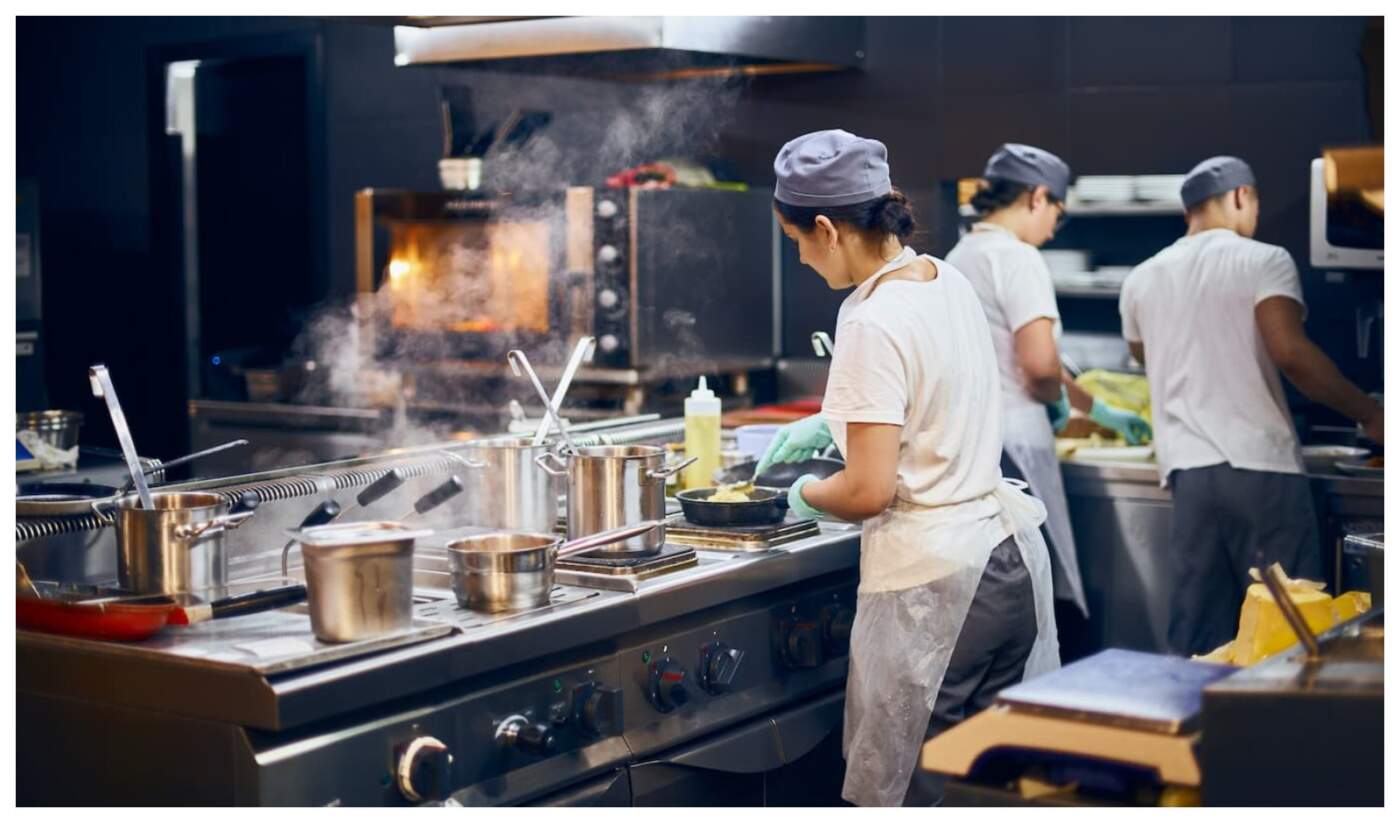
Kitchen layout and zoning also affect operational efficiency. A well-designed kitchen separates different activities into specific areas. For example, food preparation should be done in a different area from dishwashing or waste disposal. Cooking stations should also be positioned in a way that allows easy movement and communication among staff members. Clear zones help reduce crowding and make it easier for employees to perform their tasks without interruption.
Equipment planning is another important factor in maintaining efficiency. Kitchen tools and machines should support the workflow rather than slow it down. Frequently used equipment should be placed close to the areas where they are needed the most. Proper placement also ensures safe use, good ventilation, and easy cleaning.
Regular maintenance is equally important for efficient operations. Equipment that breaks down unexpectedly can interrupt the entire service process. Routine inspections, cleaning, and timely repairs help prevent such problems. Kitchens that maintain their equipment properly experience fewer disruptions and operate more smoothly.
Finally, measuring performance helps kitchens improve over time. Tracking factors such as preparation time, order completion time, staff productivity, and energy usage can reveal areas that need improvement. By regularly reviewing these indicators, kitchens can identify problems early and take steps to improve efficiency. Continuous monitoring and adjustment help kitchens maintain high performance and consistent service.