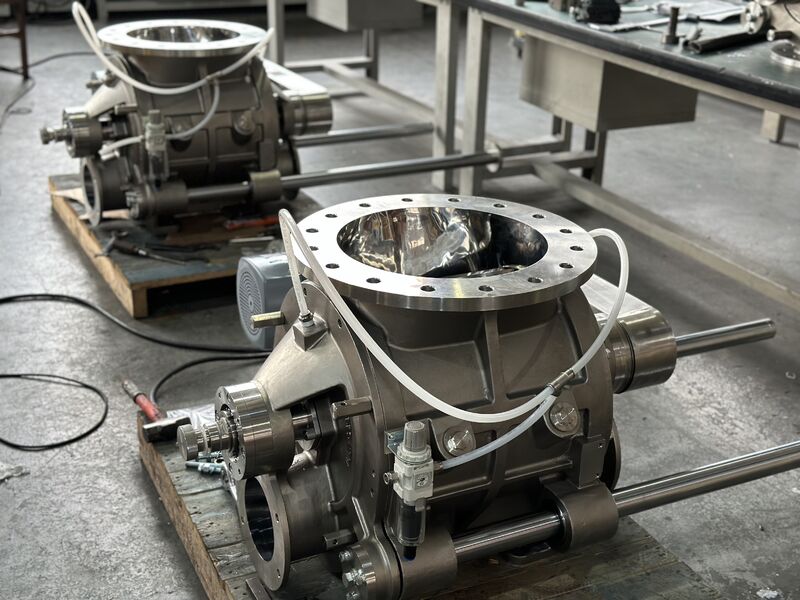

Manufacturing plants handle large amounts of powder, pellets, or fine particles during production. Smooth movement of these materials keeps machines working safely while maintaining steady output. When transfer systems lose pressure or allow leakage, equipment performance may drop, and material waste may increase. Controlled feeding devices help solve this issue by guiding material through sealed passages while maintaining system balance. A rotary air lock valve is commonly used for this purpose because it manages pressure separation while supporting steady movement of bulk materials. Proper installation improves reliability, reduces unwanted loss, and helps maintain stable operation throughout mechanical processing lines used for handling dry materials.
Controlled Material Feeding
Factories moving powders or granules need controlled transfer between equipment. A rotary air lock valve regulates flow, limits pressure loss, supports steady material feeding, while protecting processing lines from leakage.
Pressure Separation Support
Efficient material handling systems require stable pressure zones between machines. Properly designed valves maintain air balance while moving particles safely through chambers without interrupting upstream or downstream operations.
System Protection Features
Carefully designed feeding components strengthen equipment safety during continuous material movement. These elements prevent airflow disruption that may harm mechanical operations.
- Maintains sealed separation between chambers, which prevents pressure imbalance while moving powders through enclosed processing equipment safely.
- Supports steady discharge rates, which protect mechanical conveyors from sudden overload caused by uncontrolled bulk material movement.
- Helps maintain airflow balance inside pipelines, reducing dust escape, which protects sensitive mechanical components from contamination.
Consistent Flow Management
Steady movement of materials improves productivity across processing lines. Controlled discharge maintains uniform feed speed, which helps machines operate smoothly during continuous bulk handling operations.
Energy Efficient Performance
Balanced pressure control within conveying systems prevents unnecessary energy waste. Proper feeding equipment reduces airflow loss, which allows compressors or blowers to operate more efficiently.
Reliable Transfer Control
Industrial transfer systems require dependable feeding solutions for powders, pellets, or granular materials moving between equipment stages.
- Ensures uniform feeding speed, which helps conveyors operate steadily without sudden pressure fluctuations inside pneumatic transfer pipelines.
- Limits air leakage between chambers, which supports a stable airflow balance required for efficient pneumatic conveying systems.
- Supports controlled movement of particles, which prevents material buildup inside pipelines during continuous transfer operations.
Efficient material handling relies on reliable feeding equipment that keeps pressure zones stable while maintaining steady transfer speed. Numerous plants depend on tough rotating feeders because they guard machinery, reduce leakage, and support balanced airflow across enclosed pipelines. Installing dependable feeding components, such as a rotary air lock valve, helps maintain controlled discharge, supports system safety, and progresses productivity across large-scale industrial material transfer processes.
FAQs
What is the purpose of this valve in material handling systems?
It regulates particle flow between chambers while maintaining pressure separation, which supports steady transfer inside enclosed conveying systems.
How does this equipment help reduce system damage?
It supplies controlled feeding, which prevents sudden material surges that may overload machinery or disturb airflow balance inside transfer pipelines.
Why is controlled feeding important in powder handling systems?
Measured discharge maintains steady material movement, which improves operational reliability while preventing buildup or blockages inside conveying pipelines.