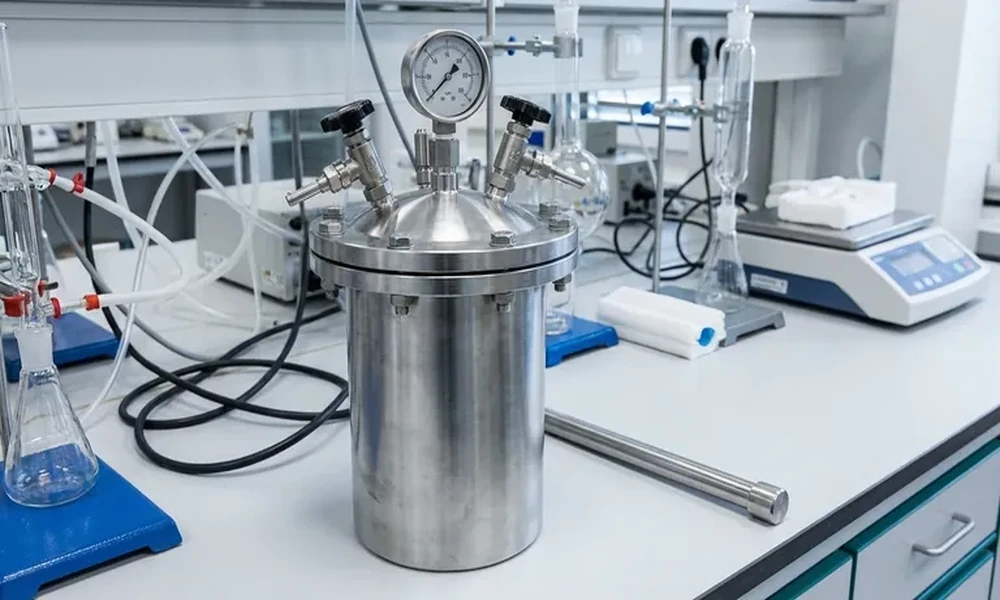

High pressure autoclaves are among the most demanding pieces of equipment that a chemical, pharmaceutical, or materials research operation can specify. The combination of elevated pressure, high temperature, and potentially corrosive process chemistry that a high pressure autoclave must contain and control safely places extraordinary demands on materials selection, engineering precision, and pressure containment integrity. Understanding what determines the quality and suitability of a high-pressure reactor for a specific research or production application is essential for procurement teams and research engineers who need equipment that performs reliably through thousands of operating cycles.
What High Pressure Autoclaves Are Used For
High pressure reactor applications span a wider range of chemistry and engineering than most buyers initially consider:
- Catalytic hydrogenation and hydro processing in pharmaceutical API synthesis and fine chemical production
- Hydrothermal synthesis of nanomaterials, zeolites, and advanced ceramic precursors
- Supercritical fluid processing, including supercritical CO2 extraction and reaction
- Polymer synthesis under high-pressure conditions
- Carbon capture and materials interaction studies at elevated pressure and temperature
- Corrosion and materials testing under simulated process conditions for oil and gas applications
- Anti-solvent crystallization for pharmaceutical particle size control and polymorph selection
The pressure and temperature requirements vary dramatically across these applications, from a few hundred bar at moderate temperatures for pharmaceutical synthesis to several hundred bar at temperatures approaching 1,000°C for materials research under extreme conditions.
Materials of Construction and Chemical Compatibility
The materials of construction are the most critical selection variable for any high pressure autoclave intended for chemical or pharmaceutical research. The vessel must resist the process chemistry at the operating temperature and pressure across thousands of operating cycles without corrosion that could compromise containment integrity or contaminate the process.
Standard materials for laboratory autoclave construction include:
- SS316 stainless steel: adequate for many pharmaceutical and fine chemical applications where strongly oxidizing or halide-containing environments are not present
- Hastelloy C-276: the standard choice for strongly acidic, chloride-containing, or oxidising environments where SS316 would suffer accelerated corrosion
- Monel 400: appropriate for hydrofluoric acid environments and certain reducing acid conditions where nickel-copper alloy provides superior resistance
- Zirconium: specified for strongly acidic environments including concentrated sulphuric and hydrochloric acid where even Hastelloy is inadequate
- Titanium: combining excellent corrosion resistance in many chemical environments with lower density than steel alloys, appropriate for applications where weight is a factor
Pressure and Temperature Rating Considerations
The operating pressure and temperature rating of a high pressure reactor must exceed the maximum process conditions with adequate safety margins, accounting for the potential for thermal runaway or unexpected pressure generation in exothermic reactions. The relationship between temperature and allowable working pressure is defined by the material’s strength-temperature curve, which means that a vessel rated at 700 bar at ambient temperature will carry a lower allowable working pressure at elevated temperature.
For laboratory research applications where process conditions are not always fully characterized before experiments begin, specifying equipment with rated parameters that significantly exceed anticipated operating conditions provides the safety margin that good research practice requires.
Scale and Geometric Considerations
Laboratory high pressure autoclaves are available in volumes ranging from 1 millilitre for precious-material or micro-scale synthetic chemistry to multiple litres for pilot-scale process development. The geometric design of the vessel, including the head closure mechanism, stirrer configuration, dip-tube arrangement, and sampling port placement, must suit the specific process being conducted rather than a generic standard configuration.
Conclusion
Selecting a high pressure reactor for laboratory or production use requires systematic evaluation of the process chemistry, the pressure and temperature operating envelope, the material compatibility requirements, the geometric configuration needed for the specific application, and the safety systems required for the operating environment. Manufacturers who offer genuine engineering customization alongside standard product ranges provide meaningfully better outcomes for research applications whose requirements fall outside the standard specification.